
The Plebe, The Service, The Return: What 35 Years Has Taught Me
Induction Day. July 7, 1986—a date etched in the memory of every member of the Class of 1990 from the United States Naval Academy. We came from all fifty states because others believed in us—family, teachers, guidance counselors, a senator, a member of Congress, even the President—trusting we were worthy of serving something bigger than ourselves.
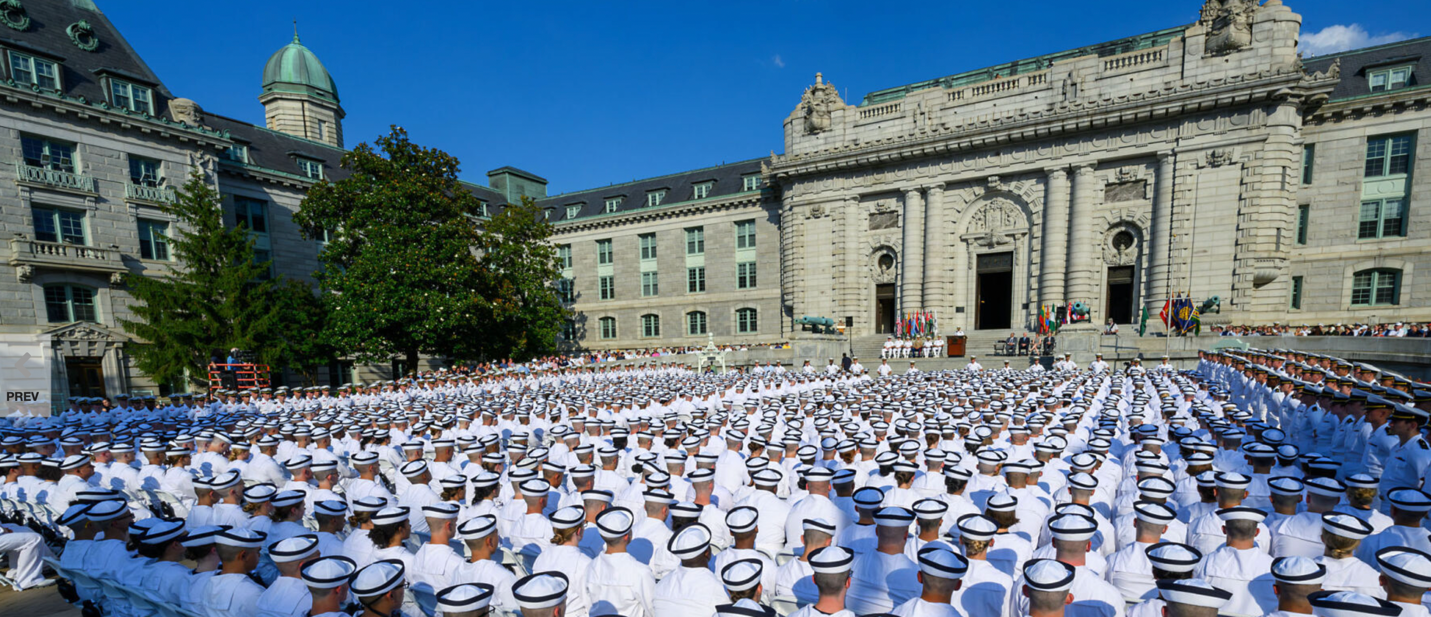
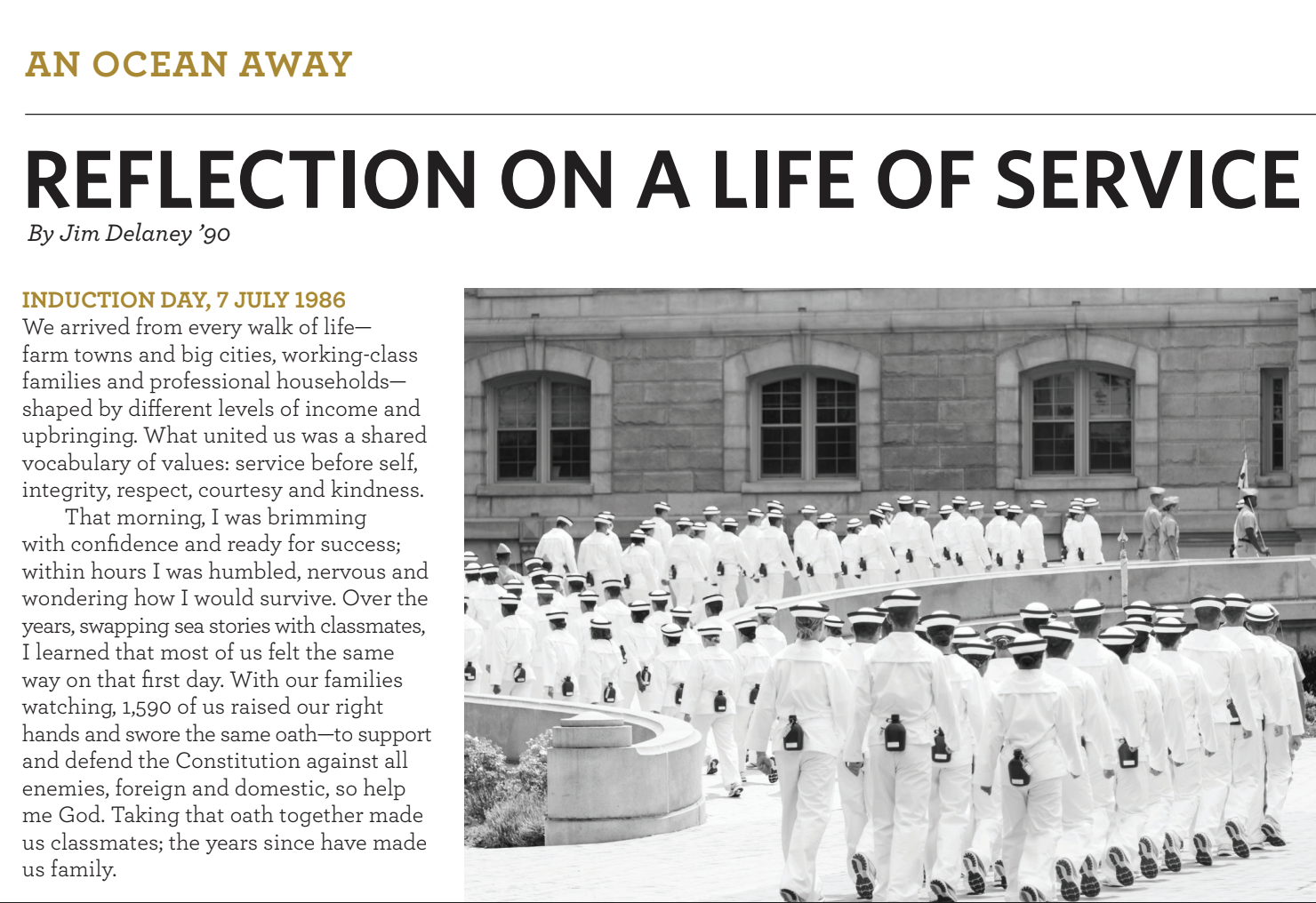
We arrived from every walk of life—farm towns and big cities, working-class families and professional households—shaped by different levels of income and upbringing. What united us was a shared vocabulary of values: service before self, integrity, respect, courtesy, and kindness.
I am the son of Irish and Polish heritage: a grandfather who served in World War II, uncles in Vietnam, and a father who enlisted in the Navy and was sent to the Bay of Pigs. In my home, the question was never whether you would serve, only which branch. For my family, the opportunity to attend the Naval Academy was pure gold—the best of military service, a chance to bring pride and honor to our name, the American dream made real.
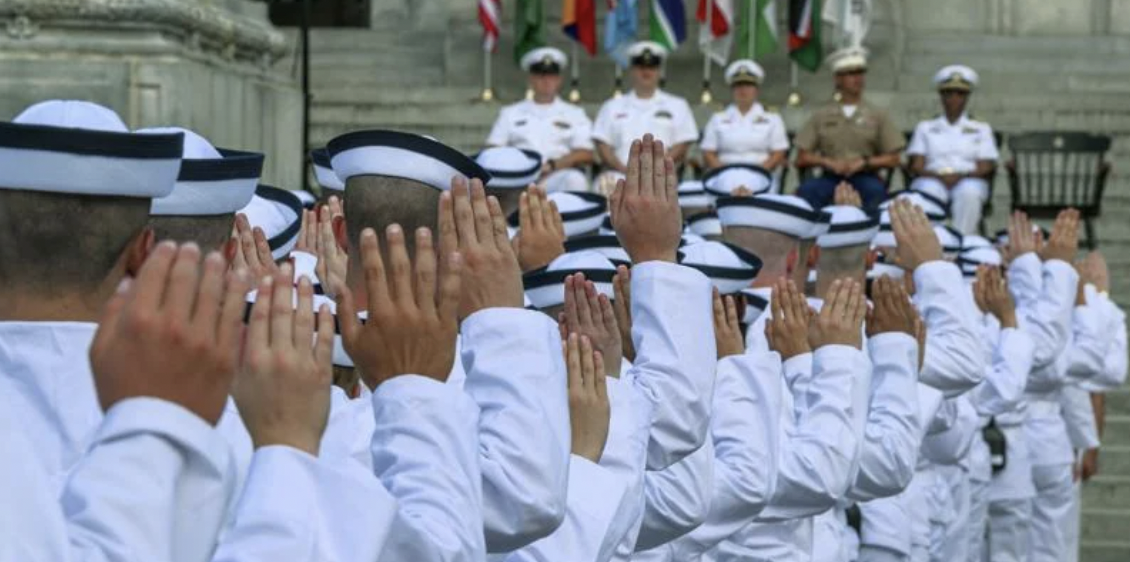
That morning, I was brimming with confidence and ready for success; within hours I was humbled, nervous, and wondering how I would survive. Over the years, swapping sea stories with classmates, I learned that most of us felt the same way on that first day. With our families watching, 1,590 of us raised our right hands and swore the same oath—to support and defend the Constitution against all enemies, foreign and domestic, so help me God. Taking that oath together made us classmates; the years since have made us family.
The Plebe
Plebe Summer teaches a thousand small lessons disguised as chow calls, uniform inspections, and miles run before sunrise. You learn to square your corners—and your words. You learn that sleep is a privilege, that “carry on” can be a benediction, and that humor is oxygen when the bulkhead closes in. Mostly, you learn that your effort is not really about you. You’re training not for applause but for accountability.
Somewhere between bracing up and bracing others, servant leadership sneaks in. You realize the best team leaders carry more than their share and take less than their credit. You watch an upper-class quietly swap a brutal watch so a classmate can call home, and you think: this is what authority is for.
Back then I thought leadership was command. Plebe year taught me it begins as custody: of standards, of each other, and of the mission you promise to guard even when no one is looking.
The Service
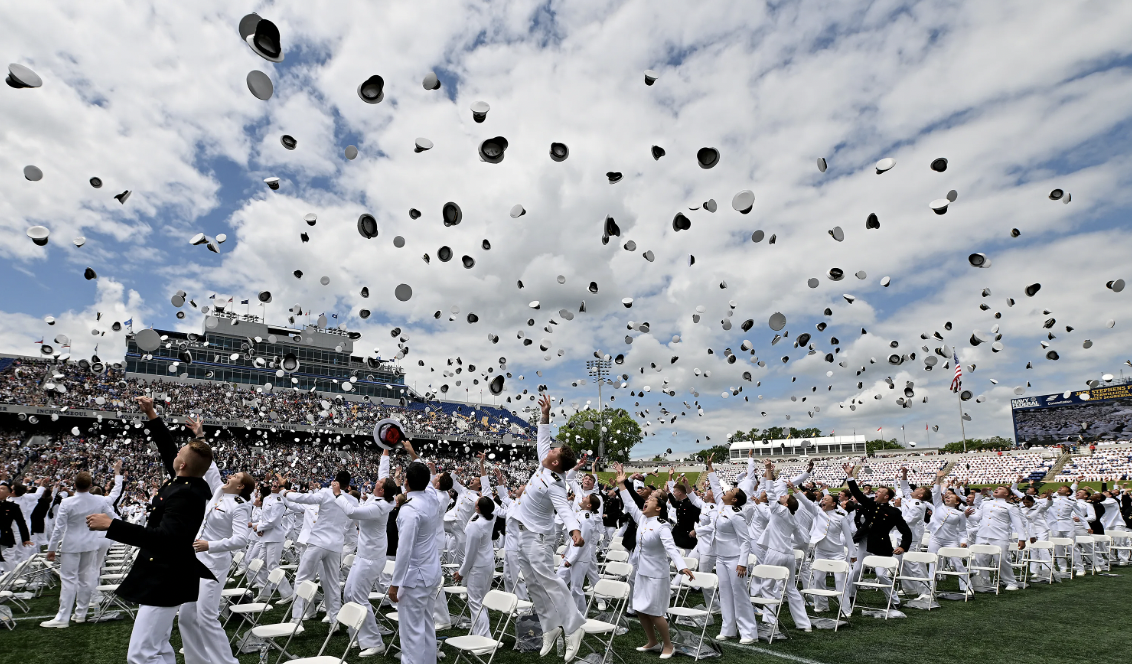
Commissioning Day — May 30, 1990. Nine hundred ninety strong. On that crisp spring morning, midshipmen from the Class of 1990 became officers; drills and practice gave way to missions and orders. We pinned on gold bars and stepped out from Bancroft’s shadows into the fleet’s bright uncertainty—ships and squadrons, staffs and sand, skies and all the unknowns ahead.
The stakes were suddenly real. Shipmates’ lives would hinge on your judgment. Carefully laid plans bent under pressure. Orders collided with circumstance. Training met reality. And you learned quickly to act through uncertainty, because waiting for perfect clarity is a luxury service rarely affords.
For me, that next chapter began in Pensacola, Florida, reporting to flight school—trading the marble halls of Annapolis for the humid air of the Gulf Coast, ready to chase wings and live out a Top Gun dream. But those dreams were cut short by an ear condition—Eustachian tube dysfunction—that grounded me before I ever truly took flight.
The Navy has a way of redirecting purpose. I became a Naval Cryptologist, serving tours in Scotland and at the National Security Agency. Where I once imagined cockpits and carrier decks, I found myself in the hidden world of signals and code—another front line, less visible but increasingly vital as cyber and information warfare grew in importance.
Those tours inspired me most because of the airmen, soldiers, and sailors I was privileged to serve alongside. We were united by a common mission: to support and defend the Constitution against all enemies, foreign and domestic. There is a quiet power to that shared oath when it’s lived in diligence rather than displayed on a parade ground.
This became my proving ground as a servant leader. I learned that leadership isn’t directing from above; it’s unblocking, enabling, and equipping others to succeed. My own style took shape—not built on authority, but on authentic leadership grounded in trust and genuine care for my teams.
This is where Stoic ideas earn their keep. Control the controllable. Prepare hard. Accept conditions. Hold fast to virtue—courage, justice, temperance, practical wisdom—and let the outcome judge itself. You won’t always get the ending you want; your job is to become the kind of person your people can trust with any ending.
Selfless service has a cost—sleep, holidays, sometimes your illusions. But it yields a single, durable lesson: leadership is the quiet transfer of weight from others onto yourself, again and again, until the mission is done.
The Return
Reunions are both a roll call and a mirror. We come back counting—classmates gained, classmates lost, stories polished by time. But after 35 years, the scoreboard shifts. The question is no longer “What did I achieve?” but “Whom did I serve—and how did they fare because I was there?”
Life after uniform tests whether our values were sewn on or stitched in. Titles change. Missions change. The demand for servant leadership does not. It looks like showing up for your kids when you’re tired, for your team when you’re stressed, for your community when you’re needed. It looks like telling the truth when it costs you and listening longer than your ego wants. It looks like gratitude—not the performative kind, but the quiet habit of noticing what is good and saying so.
If Plebe Summer trained us to carry weight, the following decades teach us to distribute it—to make others stronger for having walked with us. The happiest people I know in these final chapters are still in the business of making themselves useful. They have traded “What do I get?” for “What can I give?” and discovered that fulfillment hides in that exchange.
The Lessons that Endure

The Gouge I’d Give My 18-Year-Old Plebe Self
Don’t just read A Message to Garcia — live it. When there’s a mission, carry it. Find the route, solve the gaps, report back when it’s done. No drama. No instruction manual. Just initiative.
Earn your “Qualifications of a Naval Officer.” Not a ribbon — a reputation. As John Paul Jones put it, “It is by no means enough that an officer be a capable mariner. He must be that and more.” Be the “more”: judgment, truth, steadiness — and yes, humanity.
Standards first, then speed. Rack tight. Shoes shined. Gear squared. Small disciplines become big dependability.
Own the hard thing early. Make the tough call. Have the tough conversation. Close the loop. Momentum beats perfection.
Use authority to remove friction. Clear the path, not your throat. Equip your people. Protect their time. Pass the credit down; pull the accountability up.
Decide under uncertainty. Gather what you can, decide, execute, reassess. Repeat.
Train like it will matter — because it will. Repetition → reflex → seconds saved → lives saved.
Lead with character. Jones again: “He should be the soul of tact, patience, justice, firmness and charity.” Aim for that blend — firmness with benevolence.
Measure yourself by trust. Your goal isn’t to be impressive; it’s to be the one they count on to “carry the message to Garcia.”
(Footnote for the CEO years: I handed out Hubbard’s booklet to every leadership team I led. Some things don’t go out of style.)
Final Bearing
What the service returned most richly wasn’t rank or résumé—it was a circle of trust. Friends for life. The 2 a.m. call people who show up, no questions asked and shoulder the load like it’s their own. They helped raise our kids, stood with us to bury our parents, and still check in when the seas get heavy.
If the mission taught us anything, it’s that no one goes far alone. Commands rotate, titles change, ribbons fade; what endures is the web of people who carried weight with you and for you—classmates and company-mates, chiefs who told you the truth, spouses who kept the home port steady, teammates who showed up when the news was bad and the road was long. Friendship isn’t a perk of service; it’s the supply line.
So invest in it: show up, tell the truth, keep the rituals. Celebrate each other’s wins without comparison. Grieve together without hurry. Share the work when it’s heavy and the quiet when it’s not. Teach, mentor, and open doors as if someone once did the same for you—because they did.

Fair winds and following seas—to the Class of 1990, and to the shore party that sent us off: family, friends, teachers, coaches, and counselors whose belief became our ballast.
You helped us raise our right hands for good.
May we honor them not only with our memories but with our continued service—quiet, steady, and aimed at the good. And to the next generation watching us at this reunion: service is not a detour from a happy life.
Properly understood, it is the way.
Go Navy!


