
My niece Katie was born while her father was in Iraq.
Her first breath, her first cry and her first day home all happened while my younger brother was on the other side of the world.
This Veterans Day, someone will shake his hand and say, “Thank you for your service.” It will be kindly meant, and he’ll be grateful. As a veteran, I always am when someone says it to me.
But it’s two words short.

I’ve heard “thank you for your service” more times than I can count. At airport gates. At Eagles games, when the announcer asks veterans to stand. From a stranger in the checkout line. Somewhere along the way it became automatic. We say it the way we say “have a nice day”: sincerely, but without much thought.
This Veterans Day, I want to talk about the two words we leave out.

Most Americans no longer have someone in uniform at the dinner table. About 6 percent of American adults are veterans today, down from roughly 18 percent in 1980. Fewer than one in 200 Americans serve on active duty right now. For most families, military service is something that happens to other people. They see those people in airports and on the news, but rarely across the kitchen table.

When so few serve, it’s easy to say thank you without knowing what you’re thanking someone for. The words are right. The understanding behind them is often missing.
When most people hear “sacrifice” in a military context, they think of the service member who never comes home. Since our nation’s founding, roughly 1.3 million Americans have died in military service.
This past Memorial Day, I wrote about one of them. Kelly Mackey and I went to the Naval Academy together. We played basketball together, then went through flight school in Pensacola together. We were two young officers who believed life stretched out forever in front of us.
In 1998, Kelly and four of his crewmen died during a helicopter training mission in the San Bernardino Mountains. In my mind he is still the young Ensign from Annapolis: competitive, funny and full of life.
Memorial Day belongs to Kelly and to every family who answered the knock at the door. Veterans Day belongs to the ones who came home. What most people never see is that their sacrifice didn’t end when the deployment did.
The daily sacrifice is quieter. It never makes the news, and nobody hands out medals for it.
It’s the six-month deployment that becomes nine. Thanksgiving dinner off a tray at sea. Christmas morning on a frozen video call, if the connection holds. The anniversary celebrated three weeks late. The funeral back home you can’t get leave to attend.
It’s packing up the house every two or three years. New town, new school, new doctor, new everything. Just when the family feels settled, the next set of orders arrives.
It’s the injuries that come home with you. You can see some of them, but many you can’t. The back that aches after years in a cockpit or on a flight deck. The hearing that’s never quite the same. The nights that are harder than the days.
And it’s carrying the names of friends like Kelly for the rest of your life.
For me, it was a celebration.
I hail from a big Irish Catholic family from northern Philadelphia — the second of five children, with two brothers and two sisters. My father was one of twelve, and on his side alone I have 45 first cousins. When the Delaneys celebrate, everybody comes.
For their 25th wedding anniversary, my parents renewed their vows. They made the same promises a quarter century later, in front of the whole clan: my brothers and sisters, aunts and uncles, and a small army of cousins.
I was deployed overseas.
I wanted to be there more than almost anything. I couldn’t. There was no leave, no flight home and no way to stand next to my parents while they said those vows again.
You can renew vows again. You can throw another party. For my younger brother, who was serving in Iraq, your first daughter is born only once!
Plenty of working parents miss big moments too. A board meeting runs long or a business trip lands on a birthday, and someone misses the Little League game. Those are real trade-offs, often made for a promotion or a paycheck. Military families make a different kind of trade. Service members miss those moments because they raised their right hand and swore to support and defend the Constitution, and to protect our country and the values we share. It’s servant leadership. It’s a call to serve, and their families answer it with them.
Nobody gives you a medal for missing your parents’ anniversary or your daughter’s birth, nor should they. But multiply those moments across every birthday, holiday, wedding and funeral missed by 18 million American veterans, and you start to understand what “sacrifice” means.
I chose to serve. My family didn’t choose it. They just carried it.
Behind every person in uniform is a family that serves too. It’s the spouse who runs the household alone for months: paying the bills, fixing the furnace, getting the kids to school, and answering “When is Dad coming home?” without always knowing. Sometimes it’s a husband whose wife is the one at sea.
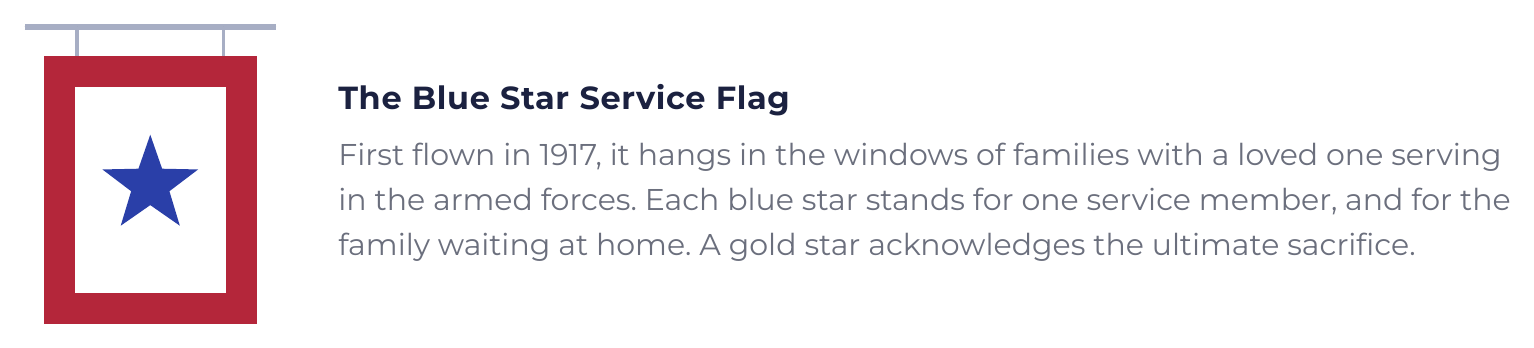
It’s the spouse who puts a career on hold, again and again. Among active-duty spouses who want to work, about one in five can’t find a job, according to the Defense Department’s own survey.
It’s the kids. The military even has a name for them: military brats. Every two or three years, the orders come and they pack up their rooms, leave their friends behind and start over. Military children change schools six to nine times between kindergarten and graduation. They’re always the new kid. They learn to make friends fast and to say goodbye far earlier than most kids should. Many of them wear the name “brat” with pride, and they’ve earned it.

They also lose a first tooth or walk across a stage while Mom or Dad is half a world away. Some of them, like Katie, are born while Dad is in a war zone.
It’s the parents, like mine, who check the news every morning and hold their breath when the phone rings from a number they don’t recognize.
None of them raised their right hand. They serve anyway, and their family sacrifice is rarely understood or acknowledged.
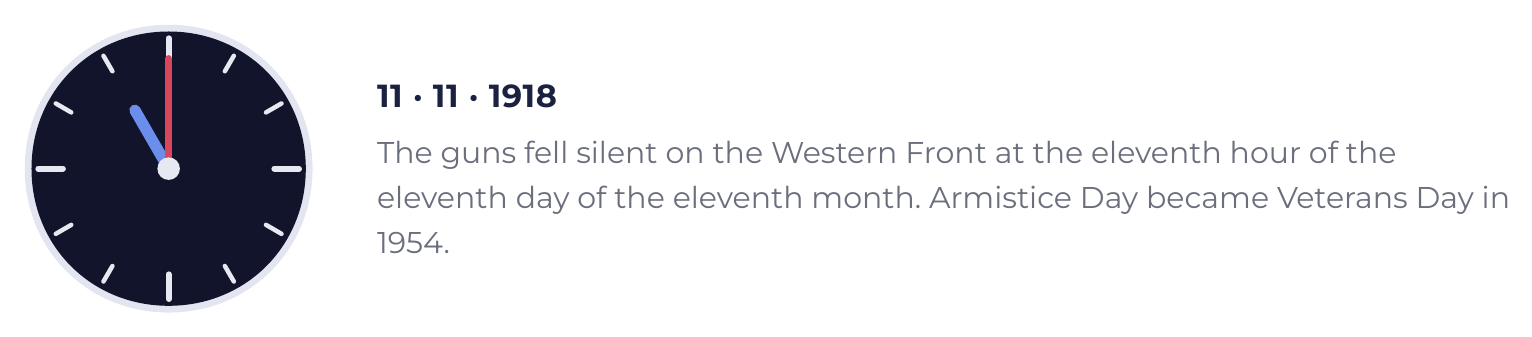
Veterans Day began as Armistice Day. It marked the end of the fighting in World War I, at the eleventh hour of the eleventh day of the eleventh month of 1918. In 1954, after World War II and Korea, Congress renamed it to honor American veterans of every war.
Memorial Day is for those who died in service. Veterans Day is for everyone who served: the ones who came home, and the families who waited for them. It’s a day for people who are still here, so it’s a day we can still say something to them.
So this Veterans Day, I’m asking for one small change. Don’t stop at “thank you for your service.” Say “thank you for your service and sacrifice.”
Then go one step further. Ask a veteran what they missed. Ask about the spouse who kept things running, the kids who grew up while they were gone, and the friend whose name they still carry. Then listen. You may be the first person who ever asked.
Every quarter I mentor veteran entrepreneurs through the PenFed Foundation for Military Heroes. I see the same traits again and again: discipline, loyalty and a willingness to carry the load without complaint. Those traits weren’t free. Someone paid for them, usually the veteran and the people who love them.
Jim Delaney is a U.S. Naval Academy graduate and former naval officer who served overseas and at the National Security Agency. He is Founder & CEO of Traction AI. He remains active with veteran organizations, including FirstWave, the Naval Academy Entrepreneurs Group and the PenFed Foundation for Military Heroes, where he mentors veteran entrepreneurs.
Sources: Pew Research Center, “The changing face of America’s veteran population” (2023) and “6 facts about the U.S. military” (2025); VA/DoD compilations of U.S. military deaths, 1775–present; DoD Office of People Analytics, 2024 Active Duty Spouse Survey; Military Child Education Coalition; U.S. Army / American Legion, Blue Star Service Flag history; U.S. Department of Veterans Affairs, History of Veterans Day.


